

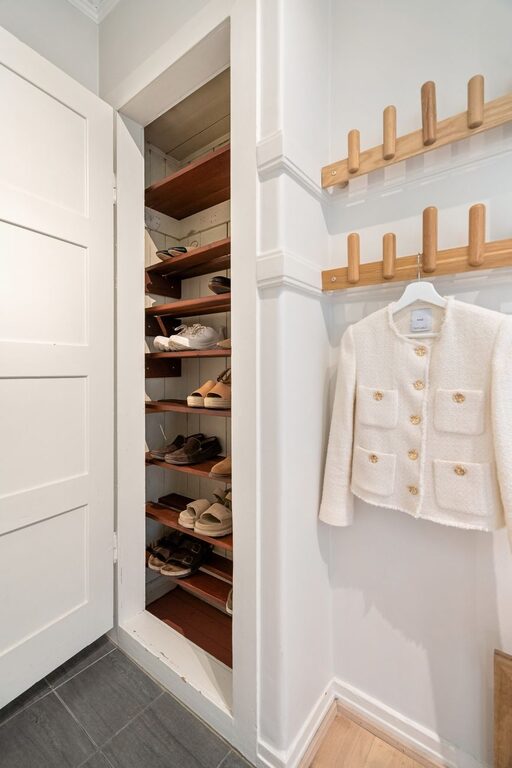
A well-organized entryway makes coming and going easier. It gives every coat, pair of shoes, bag, and key a place to go, while helping the rest of your home stay neater. Even a small entryway can work well with a few thoughtful storage solutions and simple daily habits.
The goal is not to create a perfect display. Instead, focus on making the space practical, easy to use, and simple to maintain. Use the ideas below to organize your entryway without adding unnecessary clutter.
Start by Clearing the Space
Before adding storage, remove everything from the entryway. Place coats, shoes, bags, mail, and other items in separate groups. This helps you see what belongs near the door and what has been left there by mistake.
Ask yourself:
– What do I use every day?
– What should be stored somewhere else?
– Which items are seasonal?
– What do I need when leaving the house?
– What tends to create the most clutter?
Return items that do not belong in the entryway to their proper rooms. Set aside anything you no longer use, such as worn-out shoes, old bags, or extra umbrellas. Starting with a clear space makes it easier to choose storage that fits your actual needs.
Create a Drop Zone for Daily Items
A drop zone is a dedicated place for items you carry in and out of the house. It may be a small table, a wall shelf, or even a few hooks near the door.
Keep frequently used items in this area, such as:
– Keys
– Wallets
– Sunglasses
– Work bags
– Backpacks
– Reusable shopping bags
– Dog leashes
Use a small tray or bowl for keys and other pocket-sized items. A tray keeps these objects together and makes them easier to find. If several people share the entryway, give each person a labeled hook, basket, or section of the shelf.
Try not to let the drop zone become a general storage area. Keep only everyday essentials there so the space stays useful and uncluttered.
Make Good Use of Wall Space
Vertical storage is especially helpful in a narrow entryway. Wall-mounted hooks, peg rails, and shelves keep items off the floor and make use of space that might otherwise go unused.
Install hooks at a convenient height for coats, hats, and bags. If children use the entryway, add lower hooks that they can reach easily. A row of hooks can also help separate items by person or category.
A wall shelf can hold small baskets for gloves, scarves, and hats. Add labels if several people share the same storage. This simple step makes it easier for everyone to put items away.
If you rent your home or cannot make permanent changes, consider removable hooks, over-the-door organizers, or freestanding shelves.
Organize Shoes by Frequency of Use
Shoes are one of the most common causes of entryway clutter. A basic shoe rack, bench with storage, or set of baskets can keep them contained.
Start by deciding how many pairs should stay near the door. Keep everyday shoes within easy reach, and move special-occasion or seasonal footwear to a closet or bedroom.
Helpful shoe storage options include:
– A narrow shoe rack for small spaces
– A bench with open shelves
– Stackable shoe boxes
– Baskets for slippers or children’s shoes
– A cabinet with doors for a cleaner appearance
Avoid allowing shoes to spread across the entire floor. Set a limit for the number of pairs that may remain in the entryway. This makes the system easier to maintain and keeps walking paths clear.
Add a Seat if You Have Room
A seat makes it easier to put on and remove shoes, especially for children and older family members. Choose a storage bench if you need both seating and organization.
Use the space beneath the bench for:
– Shoes
– Baskets
– Sports equipment
– Reusable bags
– Seasonal accessories
In a very small entryway, look for a slim bench or a folding seat. You can also use a sturdy stool that slides beneath a console table when not in use.
Keep the seat clear enough for its main purpose. If it becomes covered with bags and clothing, it will be less useful.
Use Baskets to Hide Small Items
Small accessories can quickly make an entryway look messy. Baskets provide a simple way to group and contain these items while keeping them close at hand.
Use one basket for each category, such as winter accessories, pet supplies, or children’s belongings. Soft baskets are useful for hats and scarves, while sturdy bins work well for heavier items.
Choose containers that fit your space and are easy to lift. If a basket is too deep, items may disappear at the bottom. Shallow containers are often better for things used every day.
Labels can help keep the system clear. You can use simple words such as “Hats,” “Mail,” “Keys,” or “Returns.”
Set Up a Mail and Paper Station
Mail and paper often collect on entryway tables. Create one specific place for incoming items so they do not spread throughout the home.
A wall-mounted file holder, letter tray, or small basket can work well. Use separate sections for:
– Mail to review
– Items to take out of the house
– Important papers
– Coupons or receipts
Sort mail regularly instead of allowing it to pile up. Recycle unwanted envelopes and advertisements as soon as possible. Set aside a few minutes each week to handle anything that needs attention.
If you do not have space for a paper station near the door, choose another convenient location and avoid using the entryway as temporary storage.
Keep Seasonal Items Under Control
Entryway storage can become crowded when coats, boots, scarves, and hats from every season stay out all year. Rotate items as the weather changes.
Store off-season belongings in labeled bins on a high closet shelf, under a bed, or in another storage area. Keep only current-season items near the entrance.
Before storing anything, check that it is clean and dry. This helps prevent unpleasant odors and keeps items ready for their next use. Review seasonal belongings once or twice a year and remove anything that no longer fits your needs.
Add a Simple Cleaning Routine
An organized entryway is easier to maintain when cleaning is part of the routine. Sweep or vacuum the floor regularly, especially during rainy or snowy weather.
Keep a small cleaning kit nearby if space allows. It might include:
– A handheld brush and dustpan
– A cloth for wiping surfaces
– A mat-cleaning brush
– A small container for lost items
Place a durable mat inside and, if possible, another outside the door. Mats help reduce dirt and moisture before they reach the rest of the home.
Make the System Easy to Follow
The best organization system is one everyone can use without much effort. Store frequently used items at eye level, keep labels easy to read, and avoid overfilling shelves or baskets.
Do a quick reset at the end of each day. Return shoes to the rack, hang up coats, place keys in their tray, and move items that belong elsewhere. This small habit can take only a few minutes and prevents clutter from building up.
An organized entryway does not require expensive furniture or a large amount of space. With clear zones, practical storage, and a simple routine, you can create a welcoming entrance that works for your household every day.